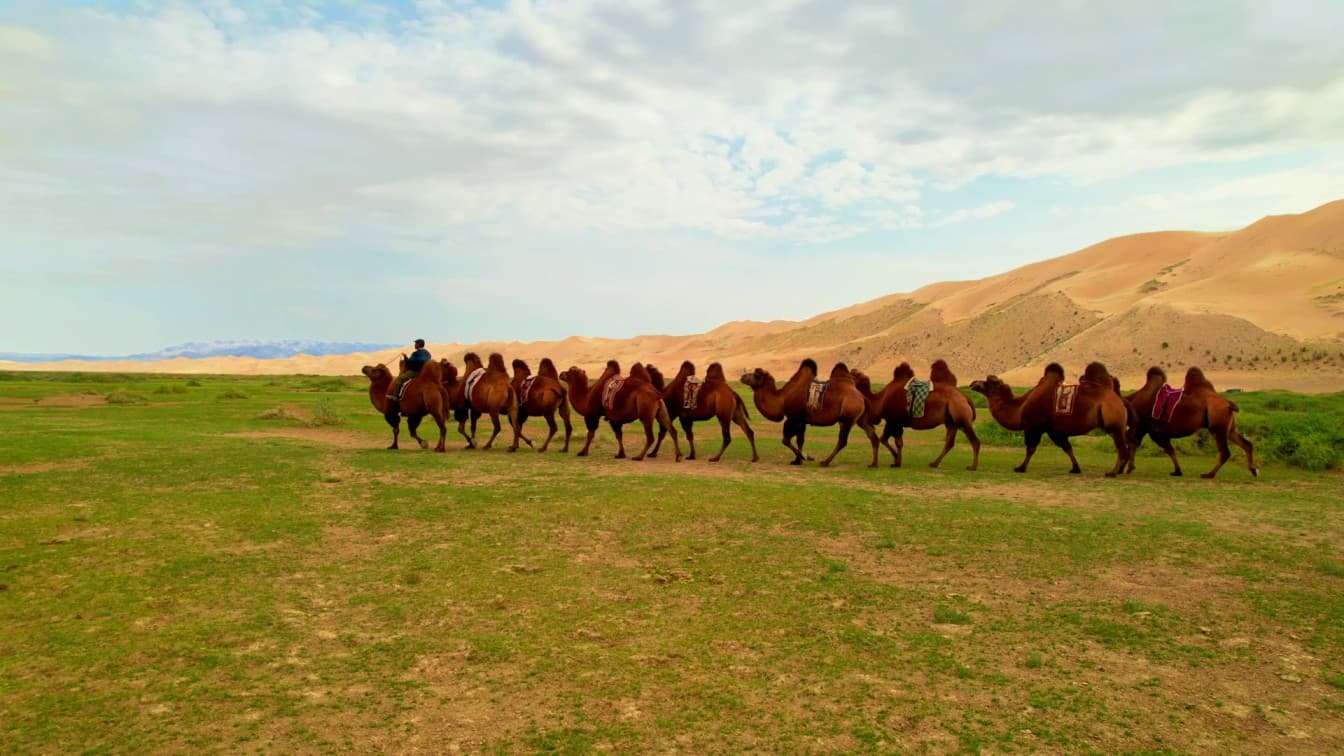
Bactrian Camel (Temee)

Gantigmaa Gantulga
Manager
The two-humped Bactrian camel is one of the most remarkable animals of Mongolia. Perfectly adapted to the harsh conditions of the Gobi Desert, it can withstand extreme temperatures, strong winds, drought, and long periods without water. Now, let's dive into this beautiful animal. But what makes this animal so special?
Remarkable Adaptations
A camel's thick coat protects it from the Gobi's freezing winter winds. Its wool naturally sheds during summer and grows back in autumn, becoming thick, soft, and warm by winter. An adult camel produces approximately 5 kilograms of wool, which is traditionally used to make clothing, blankets, ropes, and household items.
Its broad, padded feet allow it to walk across sandy terrain without sinking. Its flexible and sensitive lips help it pick even the smallest desert plants and shrubs.
One of its greatest survival advantages is its two humps. Contrary to popular belief, the humps do not store water; they contain fat reserves that provide energy when food is scarce. Camels can survive for long periods without drinking water, making them exceptionally suited to desert life.
Feeding and Daily Life
Camels mainly feed on desert vegetation, including wild onions and other hardy plants found throughout the Gobi. During the day, they swallow partially chewed vegetation and later bring it back up to chew again while resting. This process is called rumination.
During hot summer days, camels often rest on soft ground and become more active when temperatures drop. They are generally gentle and sensitive animals that can form strong bonds with their owners and familiar surroundings.
Camel Milk and Wool
Camels provide valuable resources for nomadic families. Their wool is used for warm clothing and blankets, while their milk is traditionally made into khoormog (fermented camel milk) and aaruul (dried curd).
A female camel carries her calf for approximately 13 months and can produce more than 400 litres of milk during a milking period of around 17 months.
Breeding and Herd Behaviour
Male camels, known as buur, lead and protect their herds, which traditionally consist of one male and around 30–33 females. During the winter breeding season, males become particularly territorial and aggressive as they compete to protect their herds.
Female camels, called inge, usually give birth in spring. As the time approaches, they may separate from the herd and find a quiet, secluded place to deliver their calves.
Camels and the Mongolian Nomadic Lifestyle
For Mongolian nomads, camels are much more than transportation animals. They provide wool, milk, meat, and a reliable means of carrying goods across vast desert landscapes.
A strong camel can carry loads of up to 500 kilograms, making it especially valuable for long-distance travel and nomadic life.
Today, the Bactrian camel remains an iconic symbol of the Gobi Desert and an important part of Mongolia's cultural heritage. Its remarkable ability to survive in one of the world's harshest environments makes it truly extraordinary.
About the Author
Hello! I’m Gantigmaa. I grew up in the Mongolian countryside, surrounded by livestock and nature. Now, I work in tourism, helping travelers plan their trips and discover the beautiful, hidden corners of my home country.
You might also like
View all tips →No related tips found.