MONGOLIAN LUNAR NEW YEAR (TSAGAAN SAR)
THE MONGOLIAN LUNAR NEW YEAR (TSAGAAN SAR)
According to the Mongolian lunisolar calendar, Tsagaan Sar, the Mongolian Lunar New Year, is celebrated nationwide on the first day of the first spring month each year. The celebration represents a farewell to the harsh winter and the welcome of spring. It is a time when families come together to connect with their extended family and honor elders.
THE ORIGIN AND HISTORY OF THE MONGOLIAN LUNAR NEW YEAR
The tradition of Tsagaan Sar dates back centuries. Before the 13th century, the Mongolian New Year was celebrated in autumn as a dairy-based festival known as the “White Feast.” In the early 1200s, when Chinggis Khan unified the Mongol tribes and founded the Great Mongol Empire, he established the celebration at the beginning of spring, when livestock give birth and pastures begin to flourish, symbolizing renewal and new beginnings.
HOW DO MONGOLIANS CELEBRATE?
- Pre-holiday
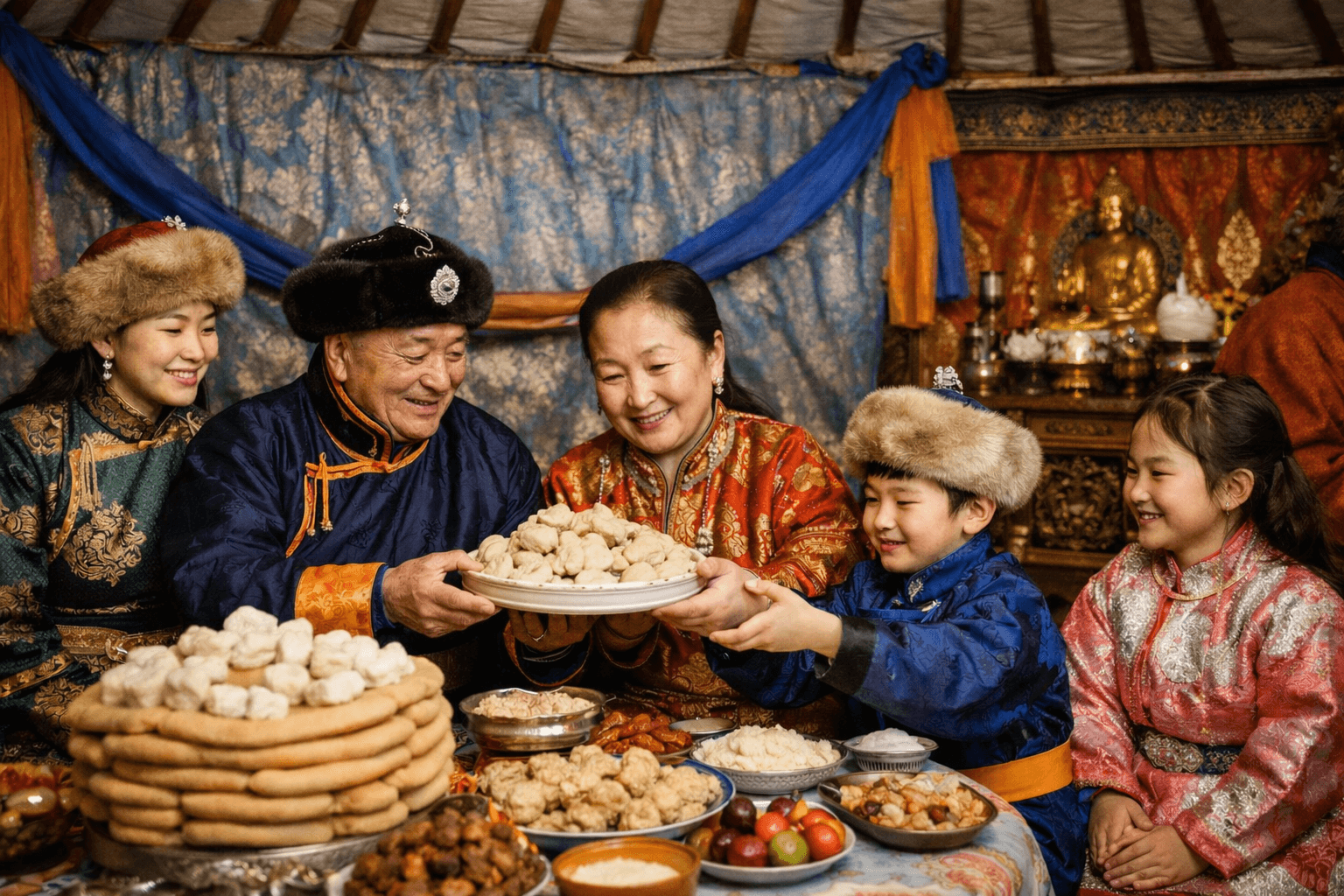
In preparation for the new year, households clean their homes, clearing away dust and clutter as a way to welcome the new year with a fresh start. Families also prepare traditional Tsagaan Sar foods, including buuz (steamed dumplings) and layered ceremonial pastries known as ul boov.
- Bituun (New Year’s Eve)
Bituun is the day before the Lunar New Year. As the moon does not appear in the sky and the night is completely dark, the day is called Bituun, meaning “hidden.”
Families set their tables with idee, the ceremonial New Year food display, along with uuts and other traditional festival dishes. Idee features layered ceremonial pastries called ul boov, with the number of layers reflecting the age of the eldest person in the family. The layers are always arranged in odd numbers. Younger families usually start with three layers, while families with elders prepare five or seven layers. The idee is then decorated with aaruul (dried curds), byaslag (Mongolian cheese), urum (clotted cream), and sweets.
Another important dish is uuts, a steamed sheep’s back with fatty tail traditionally prepared for Tsagaan Sar. It is typically made from the rump, tail fat, and ribs, and is sometimes served with other cuts of meat. Fermented mare’s milk, called airag, is also commonly served during the celebrations.
The Bituun ceremony begins after sunset on the eve of Tsagaan Sar. Families place three pieces of ice or clean snow at the doorway as water for the mount of Palden Lhamo, a protective deity believed to visit each household during the night. Thorny branches may also be placed at the entrance to keep harmful spirits away for the new year. Families gather to celebrate Bituun by sharing traditional foods and drinks, then enjoy storytelling, epic tales, and traditional games played with ankle bones.
On Bituun night, people are careful about what they do. Livestock are kept close, dogs are treated kindly, and arguments are avoided. Families stay home, speak positively, and feed their animals well, hoping for a calm and peaceful year ahead.
- Shiniin Negen (Lunar New Year’s Day)
On the morning of Shiniin Negen, people wake up before sunrise and dress in traditional clothing. Men often climb nearby hills or sacred cairns (ovoo) to greet the first sunrise, which is believed to restore one’s spirit and vitality for the year ahead. Meanwhile, women prepare traditional foods, including milk tea, buuz (steamed dumplings), tsagaalga (cooked rice with raisins), and other festive dishes. Another common custom is mur gargah, which involves choosing a favorable direction to walk according to Buddhist beliefs and performing brief rituals to start the new year.
Zolgolt is the traditional New Year greeting performed during Tsagaan Sar. Younger people greet elders by placing both hands beneath the elder’s elbows as a sign of respect. Greetings follow the order of family seniority and usually begin at the home of the eldest family member. Elders are traditionally honored with a khadag, a ceremonial silk scarf, while today gifts or cash are also commonly given. People greet one another with “Amar baina uu?”, meaning “How are you?”, often followed by blessings and a gentle kiss on the cheeks.
After greeting, people sit together to exchange snuff bottles (khuurug), catch up with one another, and enjoy the festive food. The bottle is lightly opened and sniffed before being offered, and both people bow slightly as a sign of respect.
During the days of Tsagaan Sar, people spend their time visiting relatives and extended family. When guests are ready to leave, hosts traditionally offer small gifts or treats.
About the Author
You might also like
View all tips →No related tips found.