Tour Overview
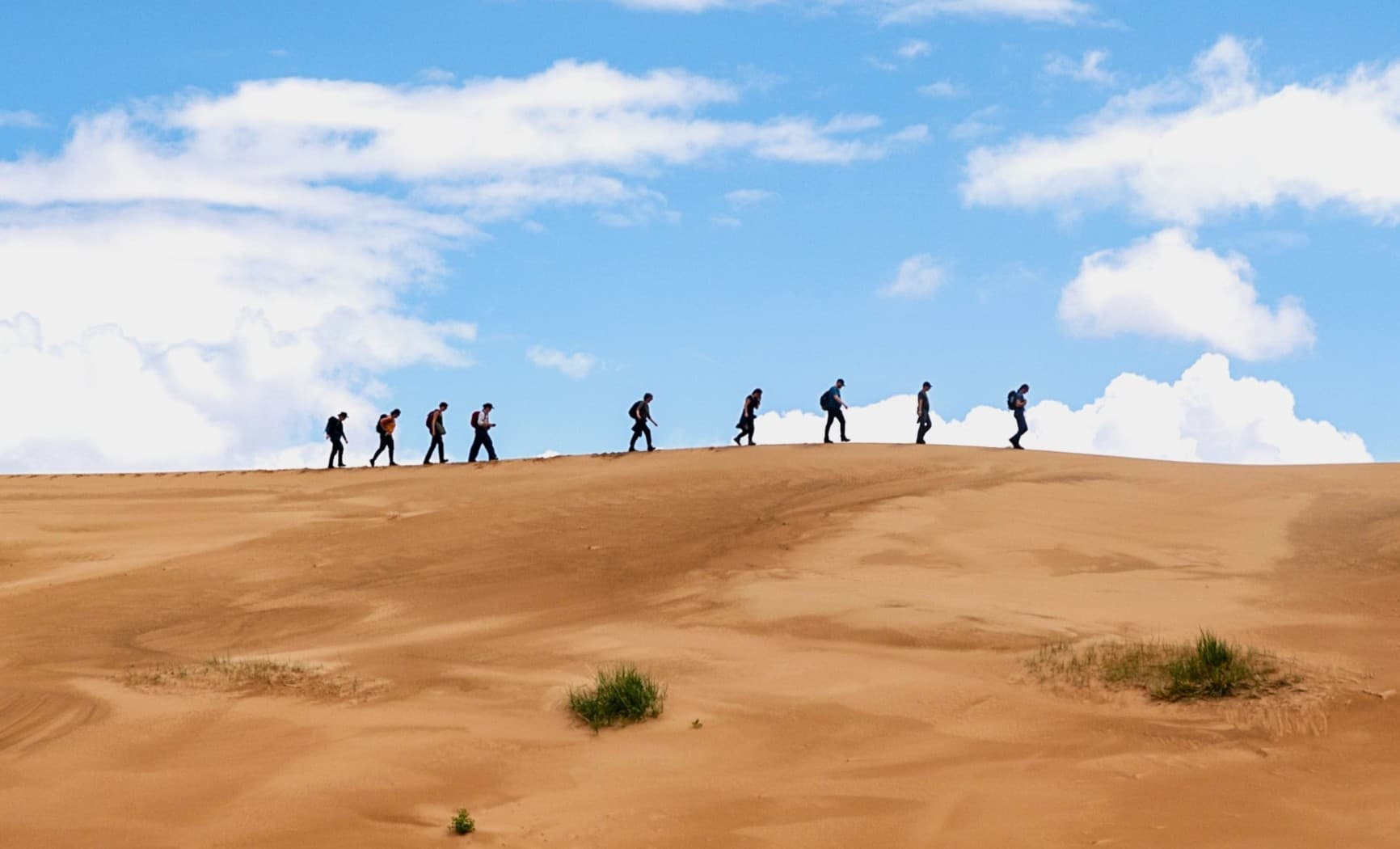
The warm, golden glow of the Gobi at dusk, together with the distant sounds of livestock and the gentle desert breeze, creates an atmosphere unlike anywhere else. For those seeking the Gobi’s authentic spirit, warm sands, and serene beauty, this journey is ideal.
Daily Itinerary
Day 1:Ulaanbaatar
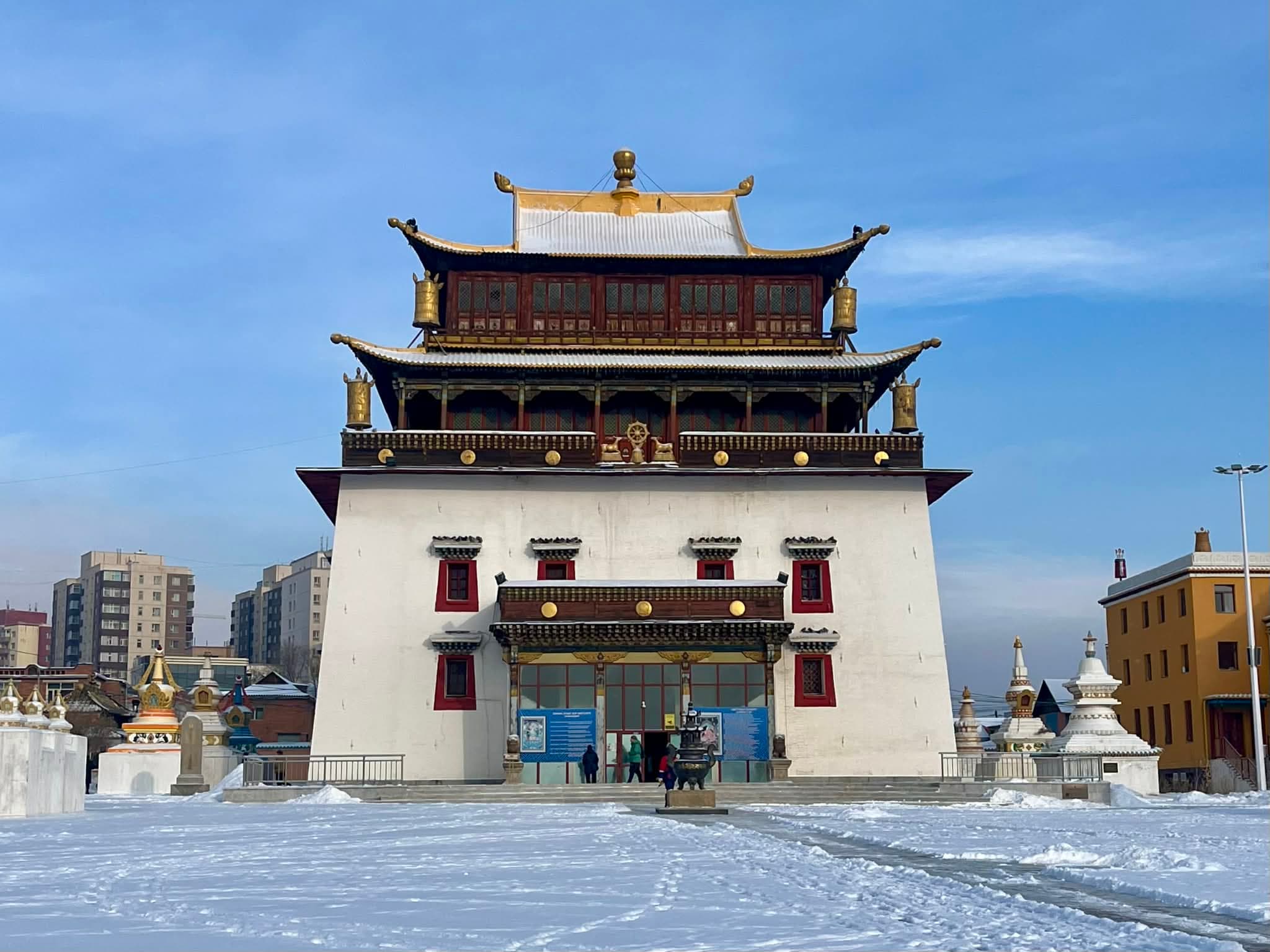
Your journey begins with a full-day exploration of Ulaanbaatar. You will visit Gandan Monastery and the Chinggis Khan National Museum, followed by an evening of traditional Mongolian cultural performance.
Day 2:Tsagaan Suvarga (White Stupa)
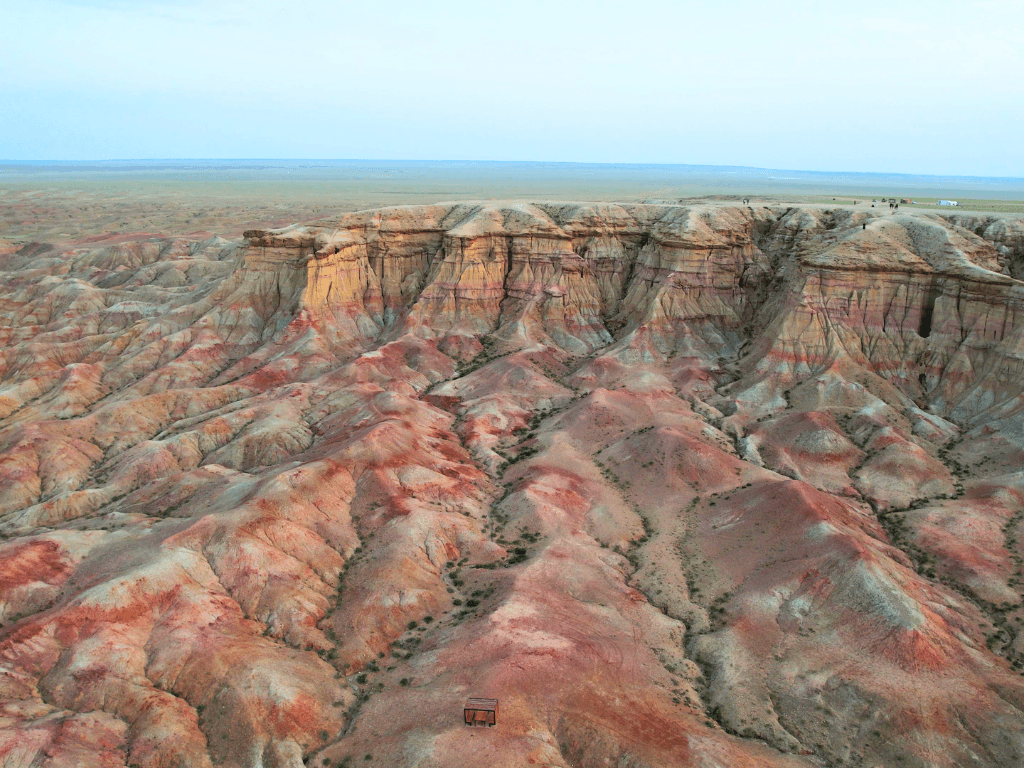
Tsagaan Suvarga is a striking cliff formation rising up to about 60 meters (197 feet) high and spreading roughly 400 meters wide. The sedimentary layers were once the bottom of an ancient sea that covered this part of the Gobi. In the early morning light, the white, orange, and red colors slowly change, giving the landscape an almost otherworldly feel and often bringing to mind scenes from Mars.
Day 3:Yoliin Am (The Yol Valley)
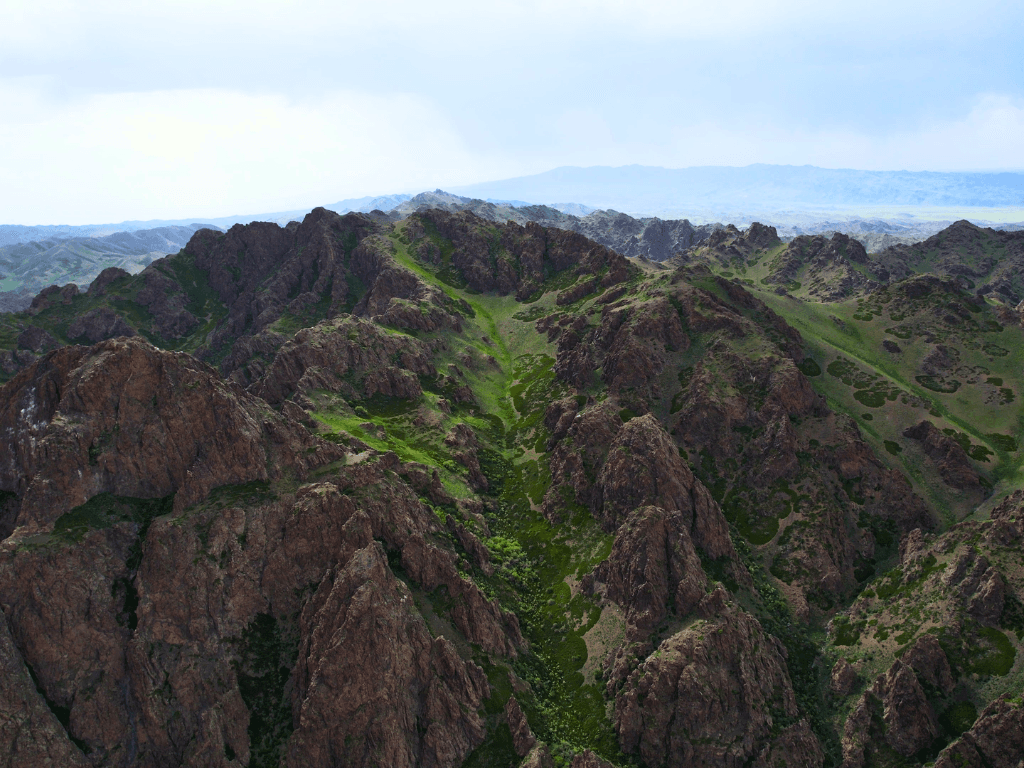
Yol Valley (Yolyn Am) is a narrow mountain gorge in the Gobi Desert where ice often remains in the shaded canyon for much of the year. The valley is rich in biodiversity and supports wildlife such as bearded vultures, eagles, argali (mountain sheep), and ibex. Even during the hot summer months, walking through the narrow gorge, where shaded sections often retain ice, offers a distinctive experience.
Day 4:Khongoriin Els (Khongor Sand Dune)
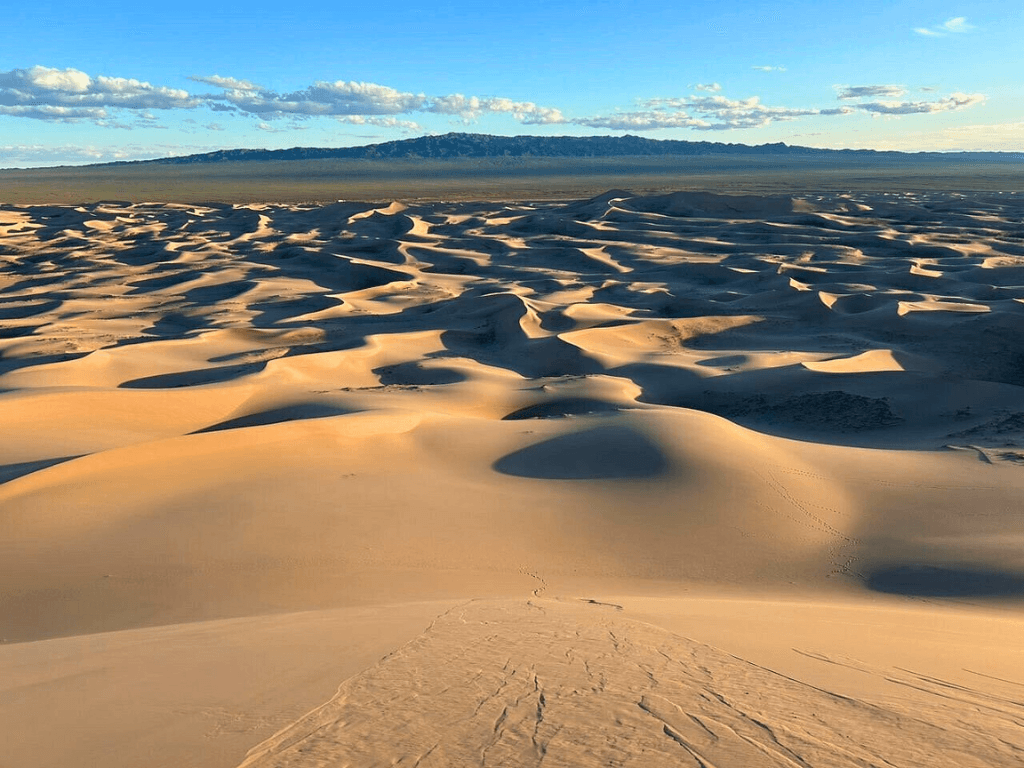
Looking across the landscape, the sand dunes stretch for about 180 km (112 miles), bordered by rocky mountains to the south and a river-fed green oasis to the north. The tallest of these dunes is Duut Manhan, also known as the Singing Dune. From the top, wave-like patterns spread across the golden sand. On windy days, warm sand slides down the steep face of the dune, creating a soft whistling sound that gives the dune its name. Today we drive 195 km to the sand dunes.
Day 5:Camel Riding at Khongor Sand Dunes
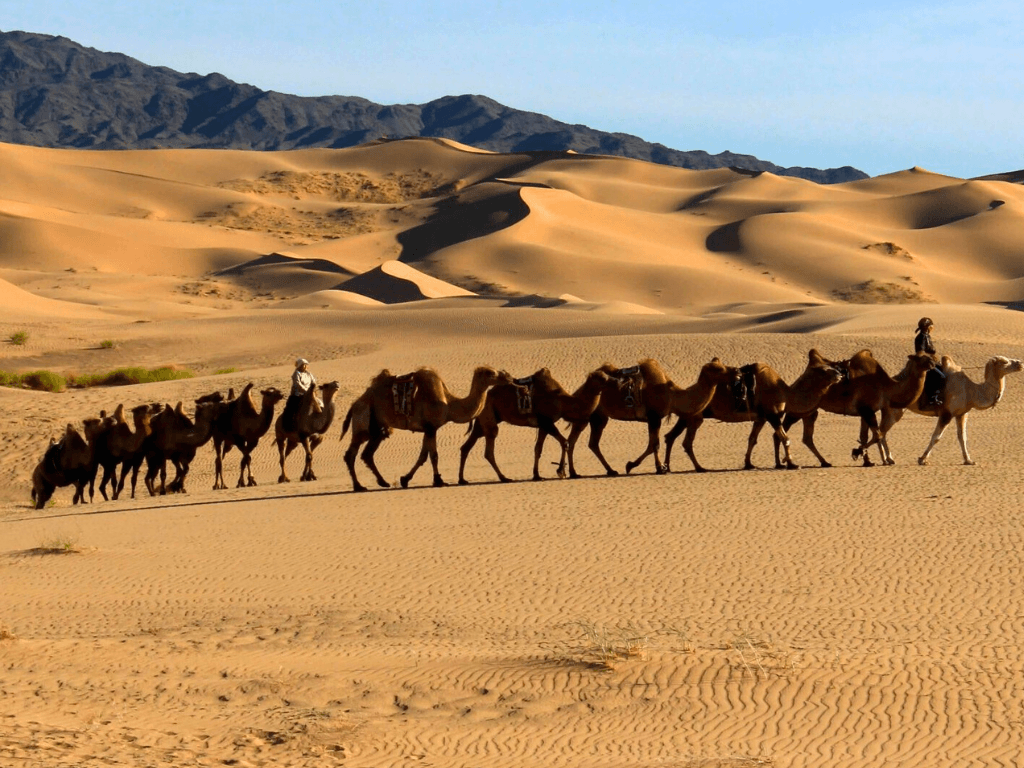
This part of the Mongolian Gobi is one of the few places where Bactrian camels still roam. Riding a camel across the dunes offers a peaceful way to experience the desert landscape, and the sunset, with its golden light glowing over the sand, is truly beautiful.
Day 6:Bayanzag Flaming Cliffs
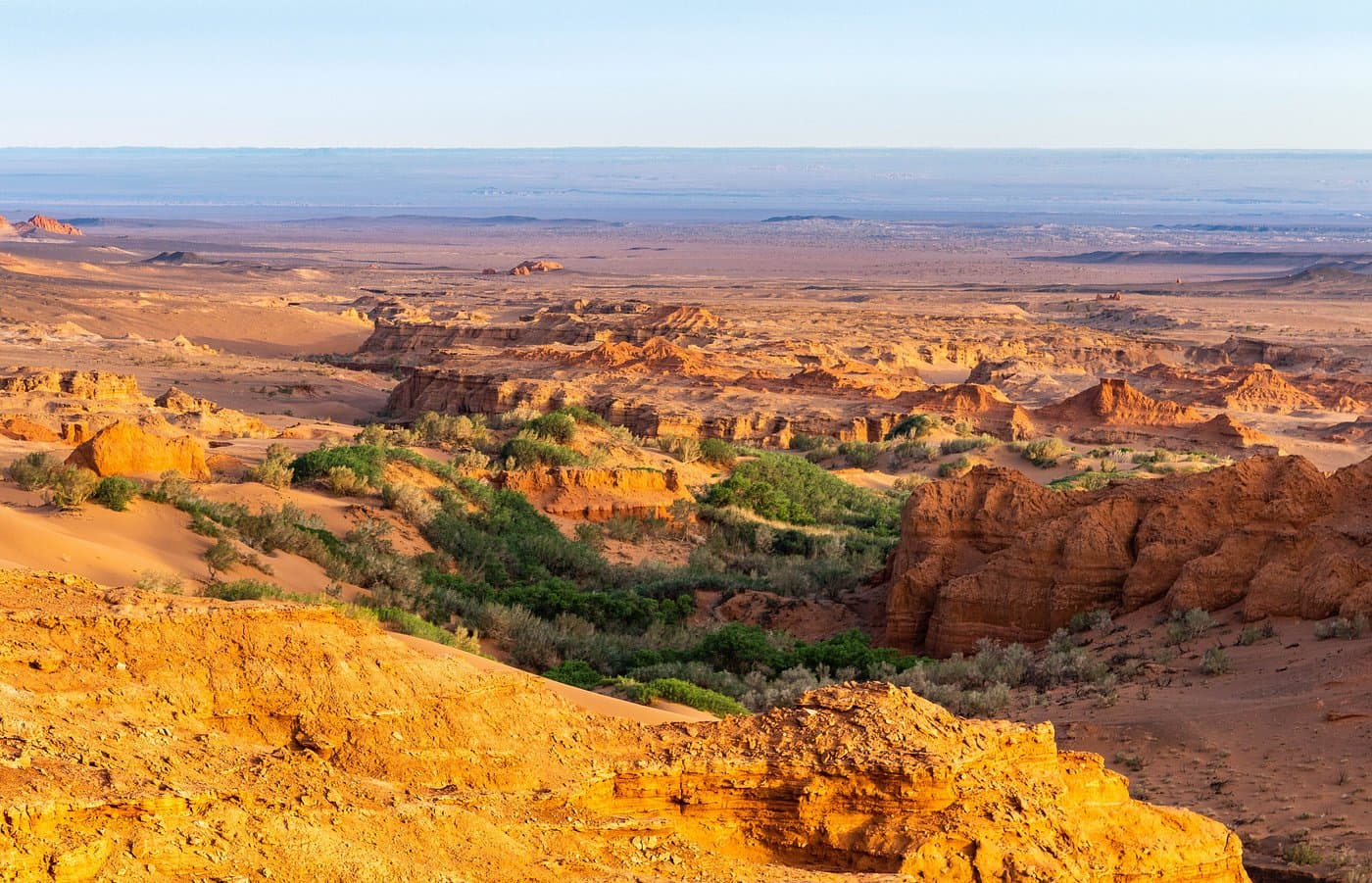
The name Bayanzag, meaning “rich in saxaul,” comes from the saxaul plants that once grew widely across the area. In 1922, American explorer and paleontologist Roy Chapman Andrews and his team uncovered dinosaur eggs and fossils here, bringing international attention to the site. As the sun lowers in the evening sky, the clay cliffs take on deep shades of red and orange, a sight that led Andrews to name the area the Flaming Cliffs.
Day 7:Baga Gazriin Chuluu
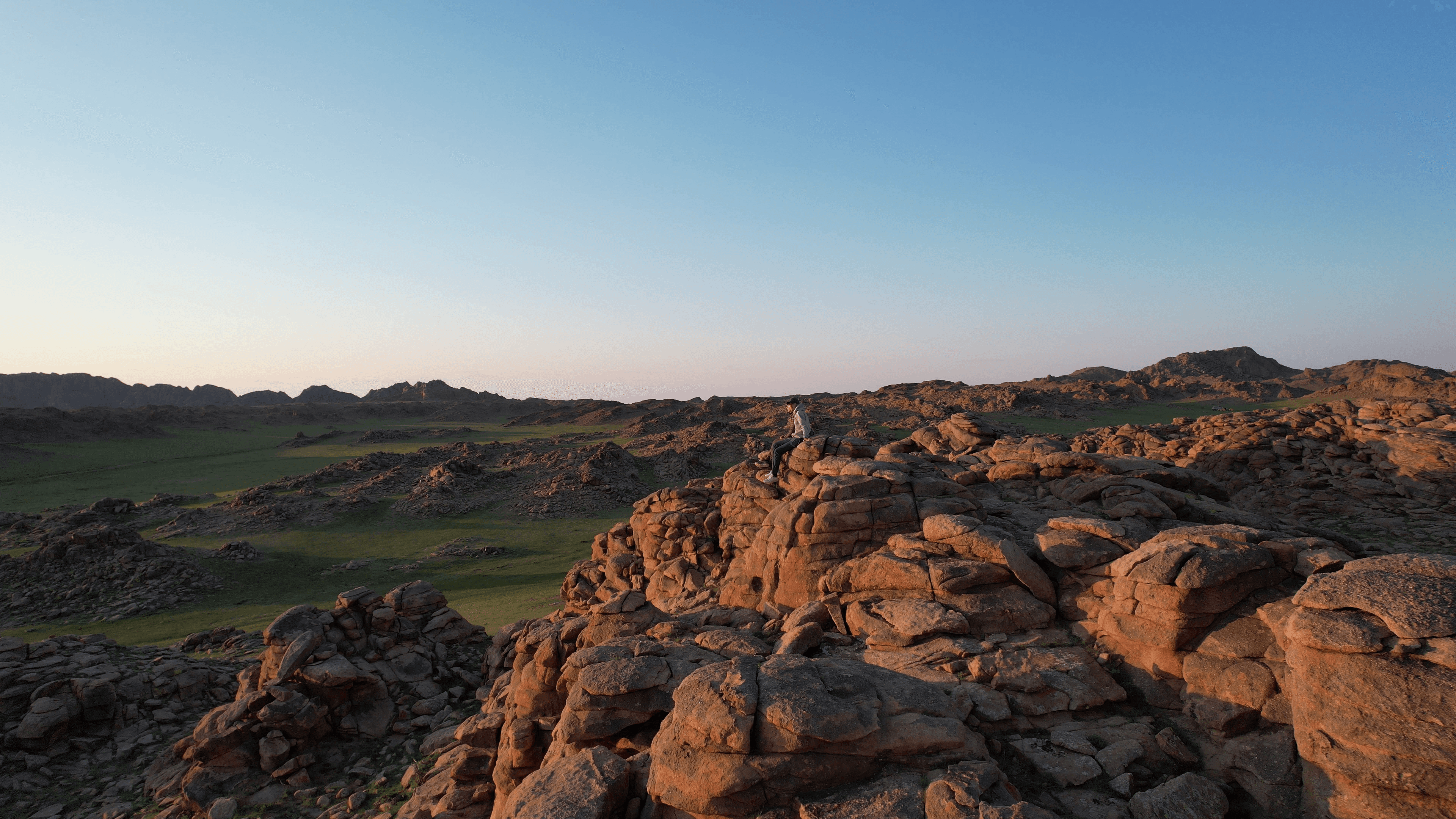
We drive to Baga Gazriin Chuluu, a granite mountain known for its unusual formations, where rock layers appear cut and stacked horizontally. This distinctive landscape is home to ibex, argali (mountain sheep), and Mongolian gazelles. Among the rocks lie the remains of a 17th-century temple, an “eye spring” believed by locals to benefit eye health, and ancient burials and petroglyphs. Enjoy hiking through the rocky terrain and a clear, star-filled summer sky. Baga Gazriin Chuluu is ideal for travelers seeking nature, history, and tranquil landscapes.
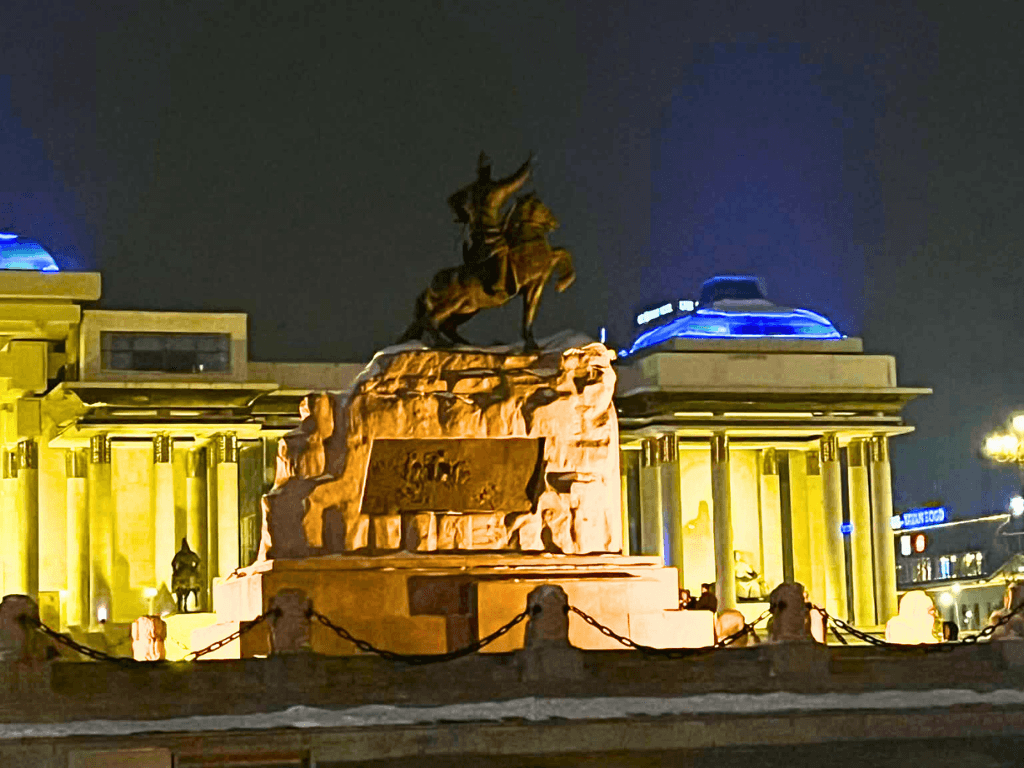
Day 8:Return to Ulaanbaatar
We drive back to Ulaanbaatar.
Price & Options
Price Includes
- Included items not listed.
Price Excludes
- Excluded items not listed.
Private Tour Packages
Choose a package below to request custom dates for your private group.
Economy
Commonly chosen package
Premium
Comfortable experience